
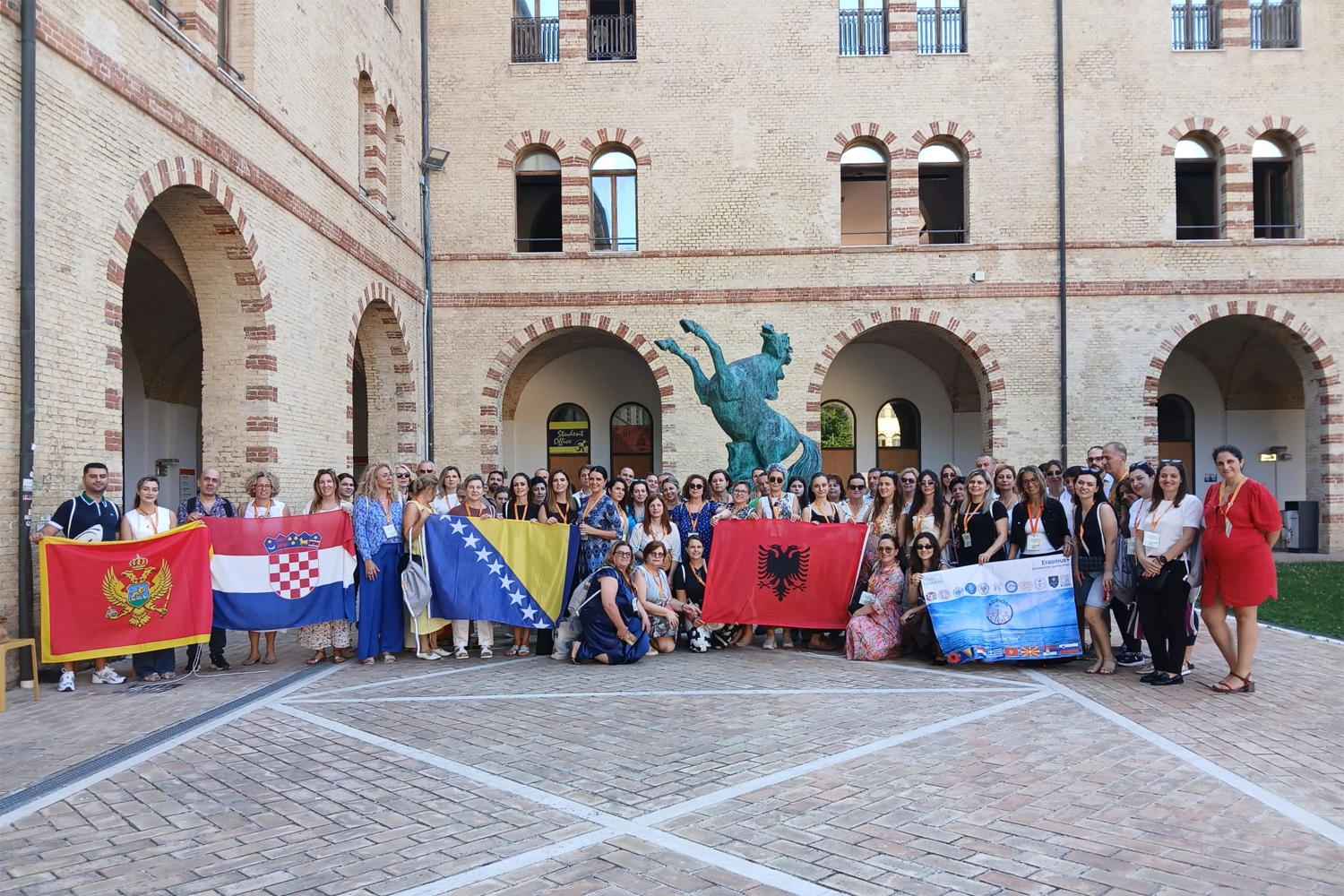
Alpsko-jadranska rektorska konferencija (AARC) poziva studente doktorskih studija našeg Univerziteta na učešće u tradicionalnoj godišnjoj…
17-21.09.2018. MF AND CIP UNZE: BUSINESS WEEK ON STUDIES AND PROJECT DTD PROMOTION

Working Sunday 17-21.09.2018. was used for the active promotion of DTD studies (Dizajn i Technology in Dwood processing) and the preparation and information of companies for training seminars as part of the RIPEUD project - Development of an innovative process of education and networking in the field of wood processing in Central Bosnia. Namely, 27.09.2018. The first of a series of seminars for businessmen from the wood processing business sector is planned to be held in the CIP UNZE Multimedia Center. The head of the RIPEUD project, Prof. Dr. Darko Petković, and his collaborator on the project first visited on September 17. (Monday) in the company FIS AMBYENTA and with Mr. Fuad Telalović, director of panel furniture production, and Miroslav Marić, head of the department, discussed these topics. Tuesday 18.09. it was reserved for the AL_EX company from Zenica and its subcontractors, and conversations in the afternoon with BH BIESSE Service. On Thursday 20.09. held a meeting in the morning with representatives of the management of the company TAMEX in Busovača and in the afternoon with the company PROGRAD in Žepč. Prof. Petković presented in all companies the level reached in the implementation of the procedure for the establishment of the DTD department at the MF UNZE and announced the start of training seminars through the EU ProLocal program project - GIZ RIPEUD. The special topic of all meetings were discussions related to potential dual education in the field of DTD and the expected project assistance from foreign partners in BiH who have so far worked intensively to establish this type of schooling, partly in secondary education. It is to be expected that in the next few years, the EU will understand the importance of transforming part of academic education into a dual study model, and in that way will help BH higher education organizations and the business sector, which have a great interest in this. This model of education is widely practiced in the leading economic powers of the EU and elsewhere such as Germany, Austria, Denmark, Switzerland, Finland and more recently in new EU members such as Hungary, Slovakia and others.
Related posts
 BA
BA